
Brain Under Construction Until 25?
Jan 18, 2026
Turns out, the construction zone might stay open until 32.
For years, I’ve used a line with students that has helped them make sense of themselves:
"Your brain is under construction until about age 25."
It has always been a helpful frame. We can drive at 16, vote and join the military at 18, drink at 21, and rent a car at 25. Those milestones have felt like cultural proof that adulthood arrives right on schedule.
But a new study and a recent NPR segment are challenging the timeline in a meaningful way. The updated story is that the brain may remain in an “adolescent” phase, structurally speaking, until around age 32, not 25.
That detail matters, not because it lets anyone off the hook, but because it changes how we teach, guide, and build understanding around growth, learning, and responsibility.
This does not excuse behavior.
It explains why certain behaviors are common during development, and it points us toward better teaching and guidance. Accountability still matters. Consequences still matter. Boundaries still matter.
What changes is how we frame it. When students understand the “why,” they gain the clarity and language to make a better next choice. They stop seeing every mistake as a personal flaw, and they start seeing it as a skill they can build.
What the new research is actually saying
The study (published in Nature) analyzed diffusion MRI data from 4,216 people, from birth through age 90, and identified four major turning points in brain network organization around ages 9, 32, 66, and 83.
In the NPR discussion, Cambridge neuroscientist Duncan Astle explains a useful way to think about that long 9-to-32 window. In childhood, the brain builds a massive amount of local wiring. From roughly 9 to 32, the brain is strengthening and “insulating” longer-range connections through myelination, which improves efficiency and integration across networks. A metaphor I love… “It's like connecting cities with highways, then improving the highways so information can travel faster and more reliably.”
That’s a powerful reframe: the brain is not “done” at 25. One part of the story (like cortical thinning in areas tied to executive control) may stabilize around the mid-20s, but the broader wiring and efficiency work continues longer.
Why this matters for schools, colleges, and workforce development
If the brain is still strengthening long-range connectivity into the early 30s, it means a lot of what we label as “adult behavior” is still developing for many students and young professionals.
That includes:
- impulse control
- emotional regulation
- long-term planning
- prioritizing
- reading the room
- navigating conflict without blowing it up
- learning from feedback without collapsing into shame
In other words, executive functioning skills and Relational Intelligence (RQ) are not side quests. They are core.
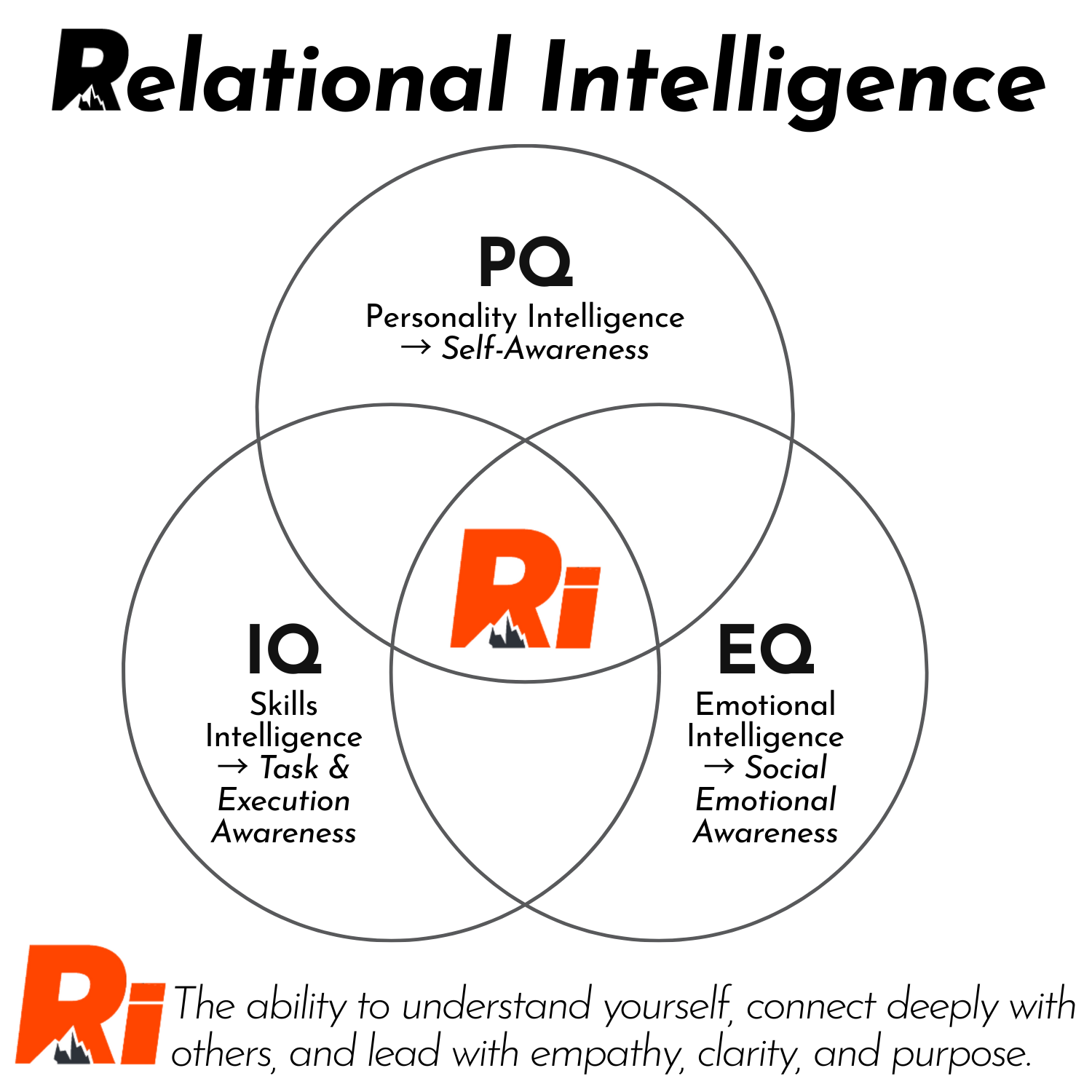
Relational Intelligence, or RQ, is the intersection of IQ, PQ, and EQ. It’s the ability to understand yourself, connect deeply with others, and lead with empathy, clarity, and purpose. When students build RQ, they are better equipped to navigate relationships, regulate emotions, and make decisions that strengthen trust instead of damaging it.
The missing curriculum: learning how to learn
Most schools do not explicitly teach students how learning works. We teach content. We teach standards. We teach skills inside courses. But we rarely teach:
- what the brain is doing under stress
- why avoidance is so tempting
- why impulsivity shows up
- how habits shape the brain over time
- how relationships influence learning, motivation, and identity
- how to build executive control on purpose
When students can label what’s happening in their brain and body, they gain something incredibly practical: clarity. They stop interpreting struggle as “I’m bad at this” and start seeing it as “my brain is building capacity.”
That shift is not motivational fluff. It is a framework for action.
A practical tool: If > Then planning
Computational thinking for Relational Intelligence (RQ)
One of the most useful executive functioning practices we teach in GRiT is If > Then planning. I like to call this computational thinking for Relational Intelligence. It’s a way of helping students run a simple decision model before emotion takes over. It takes the moment that usually triggers reaction or avoidance and turns it into a structured choice.
Here’s how it looks:
Step 1: Identify the trigger (the IF).
“If I feel disrespected…”
“If I get overwhelmed and want to shut down…”
“If I’m about to blurt something out…”
“If I’m behind and want to avoid the work…”
“If I’m anxious about being wrong…”
Step 2: Pre-decide the response (the THEN).
“…then I pause, take one breath, and ask a question instead of reacting.”
“…then I write the first sentence, not the whole assignment.”
“…then I use a reset phrase: ‘Give me a second’ and I regroup.”
“…then I ask for help early instead of disappearing.”
“…then I remind myself: being wrong is part of building the wiring.”
This is executive functioning in plain language: planning, inhibition, flexibility, and follow-through. But it also builds RQ, because many of the hardest moments students face are relational moments. Conflict, embarrassment, social risk, rejection, power dynamics, misunderstandings.
If > Then planning gives students a repeatable way to respond with intention. It helps them practice leadership in the moments that matter most.
“Know yourself to lead yourself”
This is the heart of why we teach neuroscience in GRiT. When students understand that their brain is still building efficiency and integration, they stop turning every shortcoming into identity. They begin to see patterns:
- “I get impulsive when I’m tired.”
- “I avoid when I’m afraid I’ll look dumb.”
- “I react fast when I feel judged.”
- “I can’t focus when my mind is spinning.”
And when they understand why, they can start to choose what to do next. Not perfectly. Not overnight. But consistently enough that it changes outcomes.
What leaders can do with this
If you’re a superintendent, principal, teacher, counselor, mental health navigator, professor, coach, or workforce development leader, this research offers a clear invitation:
Build environments that teach the brain you want to see.
That can look like:
- teaching learning science explicitly, not assuming students “pick it up”
- embedding executive functioning routines across classrooms and programs
- training adults on language that teaches instead of shames
- normalizing repair after conflict as a skill, not a character trait
- designing systems that reward progress, not just performance
The updated timeline does not lower the bar. It tells us the bar needs teaching, structure, practice, and repetition.
Where GRiT fits in the middle of all this
This is exactly why we built GRiT across middle school through college.
GRiT is designed to teach students how their brains learn, how habits shape outcomes, and how to strengthen executive functioning and RQ through repeated practice in real situations. It helps students connect their actions and emotions to what’s happening in the brain, then gives them tools to respond with intention.
If this “25 to 32” update resonates, I see it as a signal that this work is even more important than we realized. Many of our students and young adults are still building the wiring needed for long-term thriving, and they need adults and systems that understand how to teach that construction zone well.
If you want to learn more about GRiT and how we support schools and students through neuroscience-informed practice, you can explore more at rewirededu.com.
Not as a sales pitch. As a partnership.
Because if the brain is still wiring into the early 30s, then the question is not, “When do they finally grow up?” The better question is: How do we help them build what they need while the wiring is still being laid down?
Stay connected with news and updates!
Join our mailing list to receive the latest news and updates from our team.
Don't worry, your information will not be shared.