
The Four Predictors of Mind Health and What Schools Can Actually Do
Mar 03, 2026
This report landed on my radar because Jonathan Haidt recently shared it. If you’ve followed his work, you know he has a way of putting words to what many educators have felt building for years.
The report (Global Mind Health in 2025) uses the Mind Health Quotient (MHQ) to describe our capacity to navigate life’s challenges and function productively.
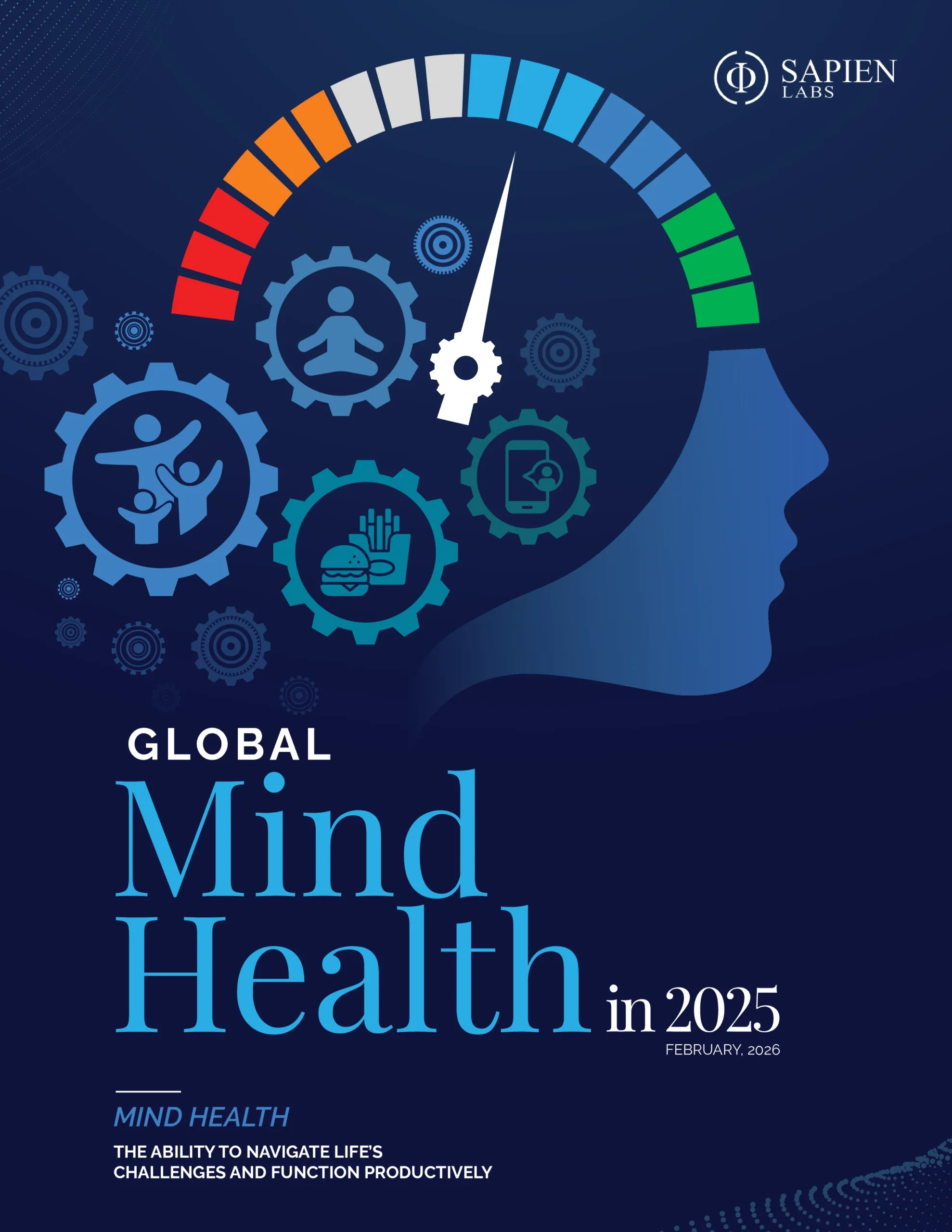
In other words, it is not just, “How happy are you?” It’s, “Can you handle life, show up, and function well?” And I would add this: happiness is often found in navigating challenges, not avoiding them.
The report’s big finding is hard to ignore: young adults are struggling at levels that don’t match prior generations, and the gap between younger and older adults is stark. Adults ages 18–34 average MHQ 36 (with 41% distressed or struggling) compared to adults 55+ averaging MHQ 101 (with 10% distressed or struggling).
Then it gets even more specific.
The report identifies four key factors that together predict three quarters of the decline in mind health:
- diminished family bonds
- diminished spirituality
- smartphones at increasingly young ages
- increasing consumption of ultra-processed food
That list matters because it moves the conversation from vague concern to actionable focus. Schools cannot control every part of a student’s life, but we can absolutely influence capacity. We can teach skills, build environments, and help students develop internal tools to navigate the world they are growing up in.
That is exactly the work we built GRiT to support.
A quick note before we go further. This does not excuse behavior.
It explains why certain challenges are becoming more common, and it points us toward better teaching and guidance. Accountability still matters. Consequences still matter. Boundaries still matter.
What changes is the way we frame student behavior and student growth. When students understand the “why,” they gain language and clarity to make a better next choice. They stop turning every mistake into identity, and they start seeing skills they can build.
Predictor 1: Diminished family bonds
The report notes a powerful association: young adults who report poor family relationships are almost four times as likely to be distressed or struggling (44% vs 12%).
Schools cannot “fix families.” But schools can absolutely teach relational capacity and provide stabilizing environments that strengthen a student’s ability to connect, communicate, and repair.
This is where Ri (Relational Intelligence) becomes a practical, teachable skill.
Relational intelligence is the intersection of IQ, PQ, and EQ. It’s the ability to understand yourself, connect deeply with others, and lead with empathy, clarity, and purpose. When students build Ri, they navigate conflict with less damage, advocate for themselves with more confidence, and build healthier relationships over time.
A key secondary support here is the CDC’s emphasis on protective factors like safe, stable, nurturing relationships and caring adults outside the family.
What schools can do:
-
Daily relational check-ins (GRiT routine): quick “What is your Hope Meter and Peace Index?" check-ins to normalize being seen and to cue self-awareness early.
-
Repair scripts and practice (GRiT relational tools): teach sentence stems like “Can we reset?” “What I meant was…” and “I own my part,” then role-play common peer and adult conflicts.
-
Calling up vs. calling out (GRiT norm): teach students how to address issues directly and respectfully, with a focus on restoring trust rather than escalating drama.
-
Mentoring and service roles (GRiT leadership): create structured peer support and mentoring moments so students practice connection, responsibility, and care.
This is how relationships become a skill set students can carry beyond school.
Predictor 2: Diminished spirituality (and the role of school culture)
The report frames spirituality as a protective factor, noting associations with lower depression and suicidality, and higher MHQ scores when spirituality ratings are higher.
In schools, this can be a sensitive topic. The takeaway is not “schools should teach religion.” The takeaway is that meaning, purpose, belonging, and values matter.
And yes, school culture fits here.
If spirituality is partly about meaning and connection, then school culture is one of the most direct levers we have. Culture shapes whether students feel known, valued, safe, and connected to something bigger than themselves.
What schools can do:
-
Purpose and identity reflection (GRiT journaling): prompts like “What kind of person do I want to be under pressure?” and “What do I want to be known for?”
-
Values into behaviors (GRiT culture language): define what relational trust, respect, and responsibility look like in real school moments (hallways, group work, online spaces).
-
Leadership through service (GRiT Sherpa mindset): build leadership pathways where students contribute, mentor, or multiply leadership.
-
Belonging pulse checks (GRiT measurement routines): quick weekly data points of optimism and relational metrics, then respond with targeted actions, not just meetings.
This is how culture becomes an environment that strengthens mind health capacity.
Predictor 3: Smartphones at increasingly young age
The report’s summary is blunt: earlier smartphone ownership is associated with increased suicidal thoughts, aggression, and other struggles later.
It also notes something that often gets overlooked: excessive smartphone time can diminish development of social cognition, like interpreting facial expressions, body language, and group dynamics.
This is why phone policies and classroom enforcement matter. The U.S. Surgeon General has also elevated concerns about youth mental health and social media, emphasizing the need for action across systems, including schools and caregivers.
But policy alone is not the solution.
Policy reduces access during the school day. Students still need capacity to make healthy choices when the phone is in their pocket at night, on weekends, and through every emotional moment.
That is why GRiTsel, GRiTspark, and GRiTedu include intentional lessons on the impact of phones and social media on mental health, habits, and Ri. In GRiTedu, we also leverage Jonathan Haidt’s The Anxious Generation to help students make informed choices about technology use.
What schools can do:
- Tech habit audits (GRiT habit lesson): students track when they reach for their phone, why they reach, and what they feel after (trigger → behavior → result).
- If > Then planning for tech (GRiT tool): “If it’s past 10 pm, then my phone charges outside my room.” “If I feel anxious, then I text a friend or journal before I scroll.”
- Phone-free practice blocks (GRiT challenge): short “focus reps” where students build the skill of sustained attention and reflect on the difference.
- Ri skill-building for social cognition (GRiT relational practice): structured face-to-face communication, group roles, and after-action reviews.
This is not about demonizing tech. It’s about rebuilding attention and relationship skills on purpose.
Predictor 4: Ultra-processed food consumption
The report ties ultra-processed foods to mind health decline and estimates this factor could contribute a meaningful portion of mental health burden even after controls.
This is not about shaming students for what they eat. It’s about understanding that inputs influence capacity. What we consume affects energy, sleep, mood stability, and cognition.
A systematic review and meta-analysis has found associations between higher ultra-processed food intake and increased odds of depressive and anxiety symptoms.
A large cohort study has also examined ultra-processed food consumption and depression risk.
This is why GRiTspark and GRiTsel include lessons on nutrition and food choices as they relate to overall health and the neuroscience of it.
What schools can do:
- Brain-fuel lessons (GRiT health + neuroscience): teach students how hydration, protein, and sleep affect focus and regulation.
- 66-day “inputs and outcomes” experiment (GRiT data routine): students track sleep, food, mood, and focus, then identify patterns and one change to test.
- Habit substitution tools (GRiT habits): “If I crash after lunch, then I drink water and take a 2-minute walk before I grab sugar.”
- Small swaps and awareness (GRiT mindset): focus on progress and “better next choice,” not perfection.
Mind health is capacity, and capacity can be taught
When the report defines MHQ as the capacity to navigate life’s challenges and function productively,
it’s describing what every educator wants for students. It’s also describing what employers want, what colleges assume, and what young adults need to thrive.
So the question becomes: If these four predictors are driving the decline, what can schools actually do?
Here’s my answer as a veteran educator: we can stop treating these as “outside issues” and start treating them as skills we can teach.
We can teach through neuroscience and relational intelligence:
- Executive Functioning (planning, inhibition, flexibility, follow-through)
We teach this through tools like If > Then planning (pre-deciding responses before a trigger hits), time awareness routines, mini-habit planning, and focus strategies tied to distraction and dopamine. Students also practice breaking work into a first step instead of avoiding the whole task, and they build planning habits through reflective check-ins and progress tracking. - Self-Regulation (how to respond under stress)
We teach this through the Thinking Brain vs Feeling Brain framework, brain-state check-ins (Green/Yellow/Red), stress threshold awareness, and explicit reset tools students can use in the moment. We also teach reacting vs responding language and give students practice with pause-and-reset strategies when they feel overwhelmed, impulsive, or emotionally flooded. - Relational Intelligence (how to build trust, repair conflict, and lead with empathy)
We teach this through listening without interrupting, I-statements, curiosity conversations, reading tone and social cues, and repair language (for example: “Can we reset?” or “What I meant was…”). Students practice the difference between calling up vs. calling out, learn how to navigate conflict with maturity, and build empathy through perspective-taking and “reading the room” activities. - Habits and Health Literacy (inputs that influence capacity)
We teach this through lessons on dopamine and distraction, screen habits, social media and mood, sleep/rest and the brain, and nutrition as brain fuel. Students use habit tools like trigger → behavior → result mapping, habit substitution, and simple inputs-and-outcomes tracking (sleep, food, mood, focus) to see how daily choices affect performance and emotional regulation. - Meaning and Belonging (identity, purpose, service)
We teach this through identity and values reflection prompts (“What kind of person do I want to be under pressure?”), belonging check-ins, healthy vs. draining relationship analysis, and ripple effect activities that help students see how their choices impact others. We also build purpose through service-oriented leadership, mentoring, and reflection practices that connect students to who they are becoming, not just what they are doing.
This is foundational to learning and life.
What GRiT means by “mind health capacity”
In GRiT, mind health capacity is a student’s ability to regulate emotions, think clearly under pressure, and stay connected to themselves and others when life gets hard. It’s the combination of executive functioning skills, self-awareness, and Ri that allows students to navigate challenges and still function productively. In MHQ terms, it’s not just feeling good, it’s building the skills to live well and lead well.
Where GRiT fits, as a partner
This is exactly why we built the GRiT suite.
GRiT is a neuroscience-informed curriculum system that teaches students how their brains learn, how habits shape outcomes, how relationships impact capacity, and how to strengthen executive functioning and Ri through repeated practice.
If this report resonates with what you’re seeing in your school, district, college, or workforce setting, I’d encourage you to explore the GRiT suite as a partner resource.
Learn more: rewirededu.com/grit-suite
Explore the broader work: rewirededu.com
Further reading and alignment
- U.S. Surgeon General Advisory: Social Media and Youth Mental Health (HHS)
https://www.hhs.gov/sites/default/files/sg-youth-mental-health-social-media-advisory.pdf - U.S. Surgeon General Advisory: Protecting Youth Mental Health (HHS)
https://www.hhs.gov/sites/default/files/surgeon-general-youth-mental-health-advisory.pdf - CDC: School Connectedness and Risk Behaviors and Experiences
https://www.cdc.gov/mmwr/volumes/72/su/su7201a2.htm - CDC: Mental Health and Suicide Risk Among High School Students (YRBS 2023)
https://www.cdc.gov/mmwr/volumes/73/su/su7304a9.htm - CDC: ACEs Risk and Protective Factors
https://www.cdc.gov/aces/risk-factors/index.html - Ultra-Processed Food Consumption and Mental Health (systematic review and meta-analysis)
https://pmc.ncbi.nlm.nih.gov/articles/PMC9268228/ - Consumption of Ultra-Processed Food and Risk of Depression (cohort study)
https://pmc.ncbi.nlm.nih.gov/articles/PMC10512104/
Stay connected with news and updates!
Join our mailing list to receive the latest news and updates from our team.
Don't worry, your information will not be shared.